Muscle Tightness and Pain | Causes, Symptoms, Treatment and Physiotherapy Guide for Muscle Stiffness
Muscle Tightness and Pain: What It Really Means and How to Treat It the Right Way | Satyarogya Healthcare, Noida
Introduction
Understanding what muscle tightness and pain really mean for your body.
Table of Contents
ToggleYou wake up with a stiff neck. Or your lower back muscles feel tight and locked after a long day at your desk. Or your calves stay tight no matter how many times you stretch them.
Muscle tightness and pain are two of the most common complaints physiotherapists hear, yet most people treat them the same way every time. They stretch, they wait, and when the tightness comes back a few hours later, they assume it is just how their body is built.
In most cases, that assumption is wrong. Muscle tightness and pain are usually your body’s way of signalling something else, whether that is a weak supporting muscle, a posture habit, poor recovery, or in rare cases, an underlying medical condition. Understanding what is actually happening inside the muscle changes how you treat it, and how long the relief actually lasts.
This guide walks through what muscle tightness really is, what causes it, when it needs medical attention, and how physiotherapy helps you fix the root cause instead of chasing temporary relief.
What is Muscle Tightness and Pain?
The real story behind muscle tightness and pain, beyond just a tight feeling.
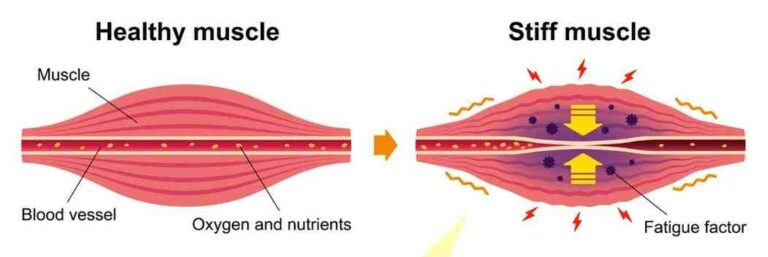
Muscle tightness is often described as a feeling of stiffness and muscle spasms, restriction, or reduced flexibility in a muscle, sometimes with pain when the muscle is touched or stretched. Clinically, this is linked to a condition called hypertonicity, where a muscle holds a higher resting tone than normal because of some form of mechanical, chemical, or psychological stress.
This is an important distinction. A tight muscle has not necessarily become physically shorter. In many cases, the muscle is contracting more than it needs to because the nervous system is trying to protect a joint, stabilise the spine, or guard against pain. This is why a muscle can feel tight immediately after stretching. The stretch itself can trigger the nervous system to increase tension again as a protective response.
It also helps to know the difference between muscle stiffness and joint stiffness. Muscle stiffness is soreness or tightness within the muscle tissue itself, while joint stiffness is a restriction in how far a joint can move, often linked to conditions like arthritis. Both can overlap, but they are treated differently.
Symptoms:
Spotting the early signs of muscle tightness and pain before they get worse.
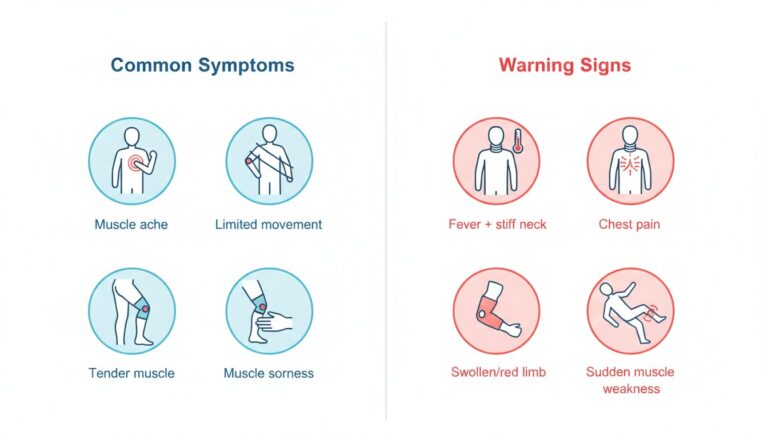
Common Symptoms
Most people experience muscle tightness and pain in a fairly predictable pattern. Common symptoms include:
A dull, aching sensation in the muscle, often worse after sitting or lying still for long periods
Reduced range of motion in the affected area, such as difficulty touching your toes or turning your neck fully
Soreness that appears within a day or two of a new or intense workout, known as delayed onset muscle soreness
Tenderness when the muscle is pressed or massaged
A feeling of the muscle “locking up” during certain movements
Mild muscle fatigue in the surrounding area after activity
These symptoms are usually short-term and improve within a few days with basic self-care.
Serious Symptoms
Some symptoms should never be ignored, since they can point to something beyond ordinary muscle tightness. Seek medical attention promptly if tightness or pain is accompanied by:
Fever, chills, or neck stiffness, which can rarely signal a serious infection
Chest pain, breathing difficulty, or pain spreading to the jaw or arm
Sudden, severe weakness in a limb
Dark coloured urine along with severe muscle pain, which can indicate muscle breakdown
Noticeable swelling, redness, or warmth in one limb
Pain that does not improve after two to three weeks despite rest and home care
Muscle stiffness that keeps worsening rather than settling down
If any of these are present, a same-day medical evaluation is the safer option rather than waiting it out.
Causes of Muscle Tightness and Pain:
What actually causes muscle tightness and pain in most people?
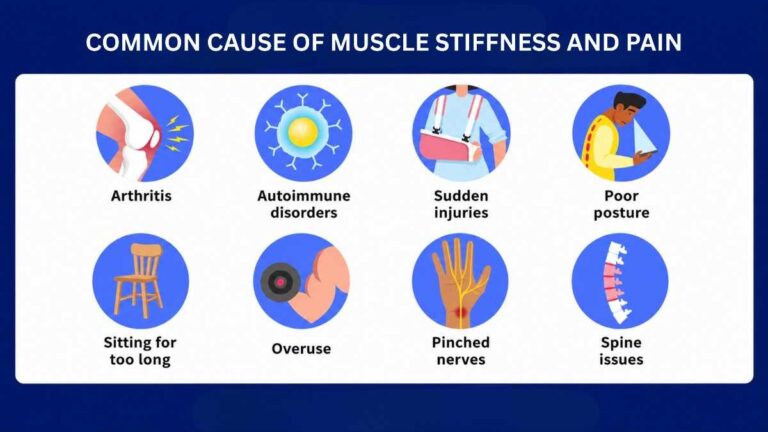
Muscle tightness and pain rarely come from a single cause. Instead, several common causes often work together and causes pain, stiffness, and reduced mobility. It usually helps to look at these three overlapping categories.
(1) Lifestyle Causes
Prolonged sitting, especially desk jobs and long work-from-home hours, which shortens hip flexors and overloads the neck and lower back pain.
Dehydration and poor electrolyte intake, which reduce muscle contraction and relaxation efficiency
Poor sleep quality, since muscle repair largely happens during deep sleep
Chronic muscle pain stress, which raises baseline muscle tension throughout the body, even without any physical muscle strain
Sedentary habits with little movement variety throughout the day
- Poor workstation ergonomics and prolonged sitting can cause muscle stiffness, particularly in the neck, shoulders, hips, and lower back.
(2) Physical Causes of Muscle Stiffness.
Overuse or a sudden increase in training intensity, leading to delayed onset muscle soreness
Muscle imbalances, where a weak muscle group forces a neighbouring muscle to work harder and stay tense
Poor movement mechanics or compensation patterns, often after an old muscle injury that was never fully rehabilitated
Trigger points, which are small, hyperirritable knots within the muscle that can also refer pain to nearby areas
Restricted fascia, the connective tissue around muscles, which limits normal gliding and movement
(3) Medical Causes
Thyroid disorders, which are commonly linked to Muscle Tightness and pain can be confirmed with a simple blood test
Conditions involving spasticity, such as after a stroke, or with cerebral palsy and multiple sclerosis
Fibromyalgia and other chronic pain conditions
Certain medications, which can list muscle stiffness as a side effect
Rarely, infections that also bring fever and other systemic symptoms alongside the muscle tightness
Identifying which category applies to you is the difference between temporary relief and long-term recovery.
Muscle Tightness in Different Parts of the Body:
Muscle tightness does not always affect the same area. The location of the stiffness often provides clues about its underlying cause. Understanding where the pain occurs can help determine the most appropriate treatment.
Neck Muscle Tightness
Neck muscles commonly become tight after long hours of computer work, poor posture, or stress. Many people notice stiffness when turning their head or looking down at a phone for extended periods.
Common symptoms include:
- Neck stiffness
- Headaches
- Shoulder discomfort
- Pain while driving
- Reduced neck movement
Physiotherapy focuses on improving posture, restoring neck mobility, and strengthening the supporting muscles.
Shoulder Muscle Tightness
Shoulder tightness often develops because of repetitive lifting, sports activities, or prolonged desk work.
You may experience:
- Difficulty reaching overhead
- Pain while dressing
- Reduced shoulder movement
- Tightness after sleeping
Early physiotherapy can improve shoulder mobility before stiffness becomes more severe.
Lower Back Muscle Tightness
Lower back stiffness is common among office workers, drivers, and people who sit for long periods.
Typical symptoms include:
- Pain after sitting
- Morning stiffness
- Difficulty bending
- Tightness while walking
Treatment usually combines stretching, core strengthening, posture correction, and movement training.
Calf Muscle Tightness
Calf muscles often become tight after running, walking long distances, or standing for extended periods.
Patients frequently notice:
- Pain while walking
- Difficulty climbing stairs
- Muscle cramps
- Tightness after exercise
A physiotherapist can identify whether the problem is related to muscle imbalance, overuse, or restricted ankle mobility.
Hamstring Tightness
Tight hamstrings can affect both athletes and people with sedentary lifestyles.
Common signs include:
- Difficulty touching your toes
- Lower back discomfort
- Limited flexibility
- Pain while running
Regular stretching combined with strengthening exercises can help improve flexibility and reduce strain.
Recovery Timeline for Muscle Tightness:
Recovery varies depending on the cause and severity of the condition.
| Condition | Expected Recovery Time* |
|---|---|
| Mild muscle soreness | 3 to 7 days |
| Muscle strain | 2 to 6 weeks |
| Sports injury rehabilitation | Several weeks to a few months |
| Post-surgery stiffness | Depends on the procedure and rehabilitation plan |
| Chronic posture-related tightness | Gradual improvement with consistent physiotherapy |
*Recovery time varies from person to person and depends on overall health, treatment, and adherence to prescribed exercises.
Why Does Muscle Tightness Keep Coming Back?
Many people experience temporary relief after stretching or taking pain medication, only for the tightness to return days later.
This usually happens because the underlying cause has not been addressed.
Some common reasons include:
- Poor posture
- Weak muscles
- Incorrect exercise technique
- Returning to activity too soon after an injury
- Lack of flexibility
- Sedentary lifestyle
- Poor workplace ergonomics
Identifying these factors is essential for long-term recovery.
Diagnosis:
How doctors and physiotherapists diagnose muscle tightness and pain.

Tests
A physiotherapist or doctor usually starts with a hands-on assessment before recommending any test. This typically includes:
Palpation to check for trigger points, muscle tone, and tenderness
Range of motion testing to see how the joint and muscle move together
Posture and movement pattern analysis, especially for recurring or one-sided tightness
If a medical cause is suspected, additional tests may be recommended, such as:
A creatine phosphokinase (CPK) blood test, which checks for tissue muscle damage
Basic blood work to rule out thyroid or electrolyte imbalances
Imaging such as ultrasound or MRI in select cases, usually when spasticity or a structural issue is suspected
For most everyday cases of tight, sore muscles, a thorough physical assessment is enough to guide treatment without needing any of these tests.
Treatment:
Treating muscle tightness and pain the right way, at home and beyond.
Home Care and Treatment
For mild to moderate tightness, several home strategies can genuinely help:
Heat therapy for general tension and stiffness, using a warm towel or heating pad for ten to fifteen minutes
Cold therapy for recent injuries or acute swelling to reduce pain and inflammation.
Gentle, active movement rather than complete rest, since movement improves blood flow to the muscle
Staying hydrated throughout the day
Over-the-counter pain relievers for short-term relief, used as directed
Prioritising sleep, since this is when most muscle repair takes place
Medical Treatment
If home care does not bring relief within a couple of weeks, or if the tightness keeps returning, medical treatment may include:
A structured physiotherapy or physical therapy program targeting the actual cause, not just the symptom
Short-term muscle relaxants are prescribed by a doctor in specific cases
Treatment of any underlying medical condition identified through testing
Referral to a specialist if a neurological or systemic cause is confirmed
Physiotherapy for Muscle Tightness and Pain:
Why physiotherapy is one of the most effective answers to muscle tightness and pain.
Benefits
Physiotherapy remains one of the most effective non-drug approaches to muscle tightness and pain because it addresses the underlying cause of the muscle’s tension, rather than merely masking the symptoms for a few hours. At Satyarogya Healthcare in Sector 20, Noida, this is the core of how we approach every patient. Instead of offering a generic stretching sheet, our physiotherapists assess posture, movement patterns, and muscle strength together to find out why the tightness keeps returning.
The benefits of this approach include faster and longer-lasting relief, a lower chance of the same tightness coming back in a few weeks, and a treatment plan that is built around your daily routine, whether you are a desk-based professional, an athlete recovering from a sports injury, a senior citizen managing mobility issues, or someone recovering after surgery.
Techniques
Physiotherapists use a combination of hands-on and active techniques depending on what is driving the tightness:
Manual therapy and myofascial release, using hands-on pressure to calm overactive muscles and release restricted fascia
Dry needling, which targets specific trigger points to interrupt the muscle pain-tightness cycle
Therapeutic exercise, focused on strengthening the muscles that are being overworked by compensation
Posture and movement correction, particularly useful for desk workers and those with recurring neck or back tightness
Electrical stimulation (TENS), used in select cases to help relax overactive muscle fibres
Home exercise programs, so progress continues between sessions
This is the same root-cause approach we use across our services at Satyarogya Healthcare, whether it is knee pain treatment, back and neck pain relief, sports injury rehabilitation, post-surgery recovery, or paediatric physiotherapy for children with developmental delays.
Exercises:
Exercises that genuinely help ease muscle tightness and pain over time.
Recommended Exercises
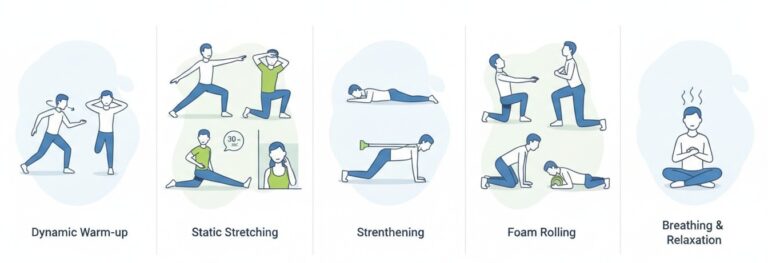
A well-rounded routine combining movement, strengthening, and stretching tends to work far better than stretching alone.
Dynamic warm-up movements such as leg swings and gentle torso twists before activity, to prepare muscles for movement
Static stretches held for about thirty seconds after activity, when muscles are already warm, targeting commonly tight areas like the hamstrings, hip flexors, upper trapezius, and calves
Strengthening exercises for the glutes, core, and upper back, since weak stabilising muscles are a common reason surrounding muscles stay tight
Foam rolling before a workout helps reduce stiffness, loosen soft tissues, and improve blood flow.
Breathing and relaxation exercises, which help lower overall nervous system tension, are especially useful for stress-related tightness
A physiotherapist can guide you on the correct order, duration, and intensity based on which muscles are actually involved in your case, since incorrect stretching can sometimes reinforce the same compensation pattern.
Common Myths About Muscle Tightness:
Myth 1: Stretching Alone Will Fix Everything
Stretching can help improve flexibility, but it does not address underlying muscle weakness, poor posture, or movement dysfunction.
Myth 2: Pain Means Complete Rest
While rest may be appropriate immediately after some injuries, prolonged inactivity can lead to increased stiffness and slower recovery.
Myth 3: Muscle Tightness Only Affects Athletes
Office workers, senior citizens, students, and people with physically demanding jobs can all experience muscle tightness.
Myth 4: Massage Is Enough
Massage may provide temporary relief, but recurring muscle tightness often requires a structured rehabilitation program to address the underlying cause.
Prevention:
Simple habits that keep muscle tightness and pain from becoming a recurring problem.
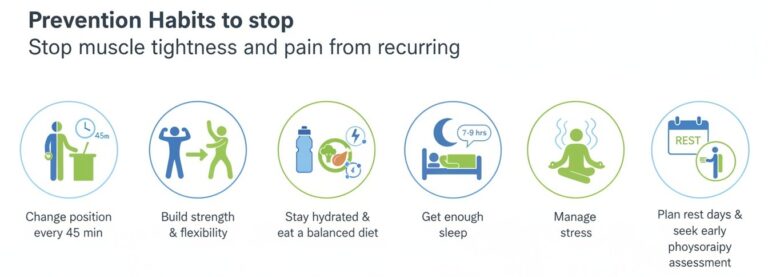
Preventing muscle tightness and pain from becoming a recurring problem comes down to a few consistent habits:
Changing position every thirty to (45) forty-five minutes if you have a desk job, even if it is just standing up briefly
Building both strength and flexibility into your weekly routine, not just one or the other
Staying hydrated and maintaining a balanced diet with adequate electrolytes
Getting seven to nine hours of sleep to support muscle recovery
Managing stress through breathing exercises, light activity, or relaxation techniques
Scheduling planned rest days in your training routine instead of waiting until pain forces you to stop
Getting a physiotherapy assessment early if tightness becomes a recurring pattern, rather than waiting for it to turn into a bigger injury
Work From Home Tips to Prevent Muscle Tightness:
If you spend most of your day working at a computer, these habits can help reduce muscle tightness:
- Stand up and move every 30 to 60 minutes.
- Keep your screen at eye level.
- Sit with your feet flat on the floor.
- Relax your shoulders while typing.
- Avoid looking down at your phone for long periods.
- Perform gentle stretching during breaks.
- Stay hydrated throughout the day.
Small changes in your daily routine can significantly reduce the risk of chronic muscle stiffness.
When Home Remedies Are Not Enough:
Home remedies may help with mild muscle tightness, but professional assessment is recommended if:
- Pain persists for more than one week.
- Tightness keeps returning.
- You experience numbness or tingling.
- Walking becomes difficult.
- You have weakness along with stiffness.
- Pain follows a fall or sports injury.
- Daily activities become uncomfortable.
Early physiotherapy can help identify the cause and prevent long-term complications.
Frequently Asked Questions
If tightness returns within a few hours of stretching, the issue is usually not about flexibility. The nervous system may be increasing tension to stabilise a weak or overworked area. In these cases, strengthening the surrounding muscles alongside stretching tends to work better than stretching alone.
Not always, but it is one of the most common and overlooked reasons. When a stabilising muscle, such as the glutes or core, is not strong enough, nearby muscles compensate and stay chronically tense. Lifestyle factors like dehydration, poor sleep, and stress also play a large role independent of muscle strength.
You should consider a physiotherapy assessment if tightness lasts more than two to three weeks despite home care, keeps returning in the same area, affects your daily movement or sleep, or started after an injury or surgery. Early assessment usually leads to a faster and simpler recovery.
Physiotherapy is one of the most effective treatments for muscle tightness and pain because it focuses on the root cause instead of only relieving symptoms. Depending on your condition, treatment may include manual therapy, stretching, strengthening exercises, posture correction, and movement retraining to improve flexibility and reduce recurring pain.
You should consult a physiotherapist if your muscle tightness lasts longer than a week, keeps returning, limits your movement, or interferes with work, exercise, or daily activities. Early assessment can help prevent long-term stiffness and reduce the risk of further injury.
Recovery time varies depending on the severity and cause. Mild muscle tightness may improve within a few days, while chronic conditions or sports-related injuries may require several weeks of physiotherapy and rehabilitation.
Conclusion:
The bottom line on muscle tightness and pain, and what to do next.
Muscle tightness and pain are your body’s way of communicating that something in your movement, recovery, or daily habits needs attention. Stretching alone may ease the discomfort for a while. Still, lasting relief comes from understanding and treating the actual cause, whether that is a weak muscle, poor posture, insufficient recovery, or an underlying condition that needs medical evaluation.
If your muscle tightness and pain keep returning no matter what you try at home, it is worth getting a proper assessment rather than continuing to guess. At Satyarogya Healthcare, our physiotherapists in Sector 20, Noida, focus on identifying the root cause of your pain and building a personalised recovery plan around it, whether you are dealing with everyday stiffness, a sports injury, post-surgery recovery, or a more complex condition.
Don’t ignore pain. Get the right treatment at the right time.
Book your physiotherapy session today, or visit our clinic in Sector 20, Noida to start your recovery with expert care.
📞 WhatsApp for enquiries: +91 8448574664 🌐 Website: www.satyarogya.com
Author Profile
Reviewed by the Physiotherapy Team at Satyarogya Healthcare. Satyarogya Healthcare is a physiotherapy and rehabilitation center based in Sector 20, Noida, working with patients on knee pain, back and neck pain, sports injuries, post-surgery recovery, pediatric physiotherapy, and neurological rehabilitation. Our approach is centered on identifying the root cause of pain and guiding patients through structured, expert-led recovery rather than short-term symptom relief.
Book a FREE Consultation Today
Still struggling with muscle tightness or pain?
Don’t let discomfort affect your daily life. Get a personalised assessment from our expert physiotherapists and start your recovery with the right treatment plan.
Satyarogya Healthcare
Trusted Physiotherapy & Autism Centre in Noida
- D-3, Sec-20, Noida, UP
- +91 8448574664
- info@satyarogya.com
- Physiotherapy
- Nursing
- Autism (ASD)