Best Frozen Shoulder Treatment in Noida - Best Physiotherapy Clinic
Satyarogya Healthcare in Sector 20, Noida
Quick Answer
Frozen shoulder, medically known as adhesive capsulitis, happens when the shoulder capsule tightens and thickens, causing pain and reduced range of motion. It usually develops slowly over months. Frozen shoulder treatment typically includes physiotherapy, stretching exercises, and in some cases medication or injections, with most people regaining shoulder mobility over time through consistent, guided rehabilitation.
Table of Contents
ToggleKey Takeaways
Frozen shoulder develops in THREE stages: Freezing, Frozen, and Thawing.
Physiotherapy is often recommended as a core part of frozen shoulder treatment.
Early diagnosis and consistent stretching can help preserve shoulder mobility.
Recovery timelines vary and depend on individual factors like age and activity level.
A qualified physiotherapist can guide safe, structured shoulder exercises for lasting relief.
What Is Frozen Shoulder?
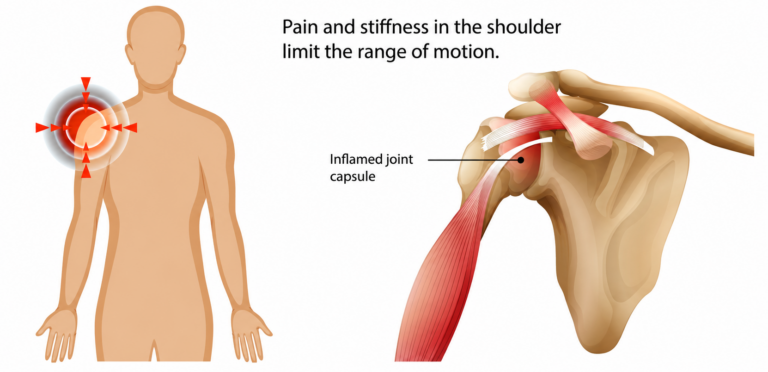
Frozen shoulder is a condition where the flexible tissue surrounding the shoulder joint, called the joint capsule, becomes thick, stiff, and tight. This capsule normally allows the shoulder to move freely in almost every direction, including reaching overhead, behind the back, and across the body. When the capsule tightens, movement becomes painful and restricted, sometimes to the point where lifting an arm to comb hair, wear a seatbelt, or reach a shelf feels genuinely difficult.
The medical term for this condition is adhesive capsulitis. The word “adhesive” refers to bands of stiff tissue, sometimes called adhesions, that form inside the joint capsule and limit movement. Unlike many other shoulder problems, frozen shoulder is not primarily caused by damage to muscles, tendons, or bones. It is a problem with the connective tissue that wraps around the joint itself.
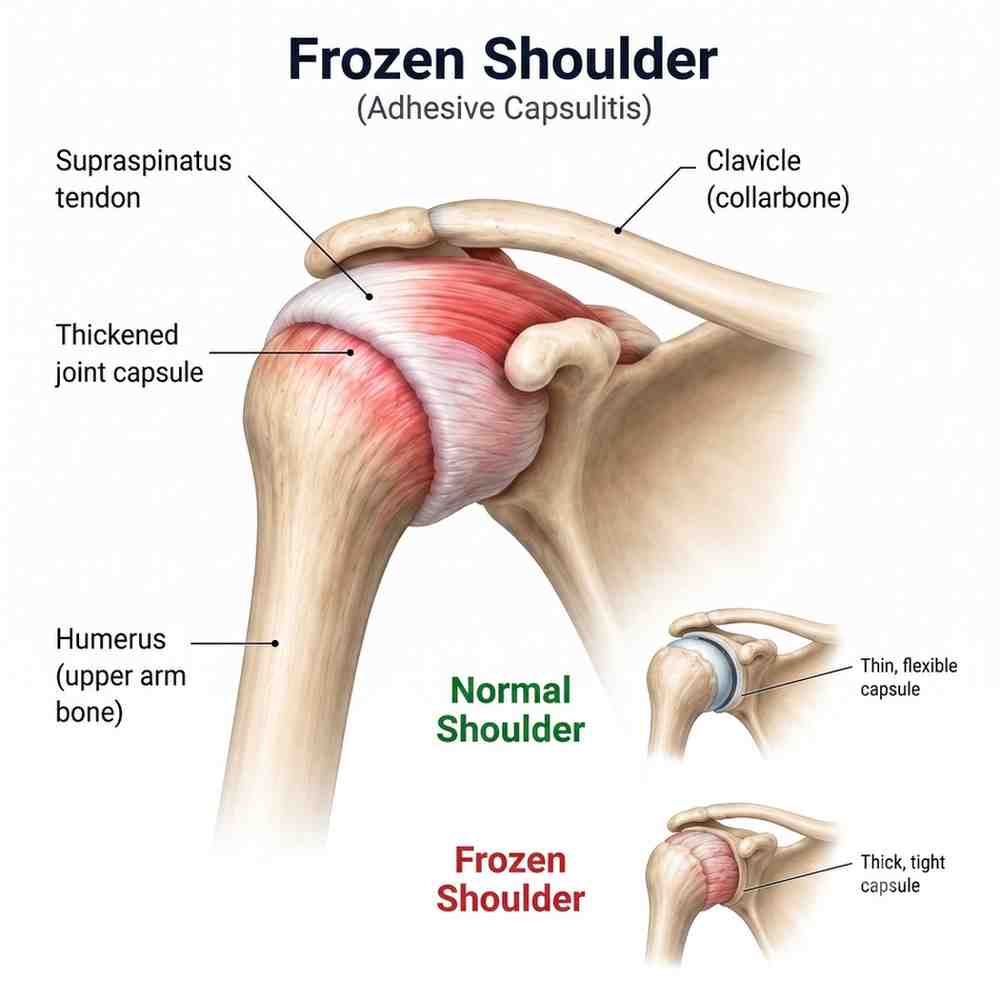
Frozen shoulder is different from general shoulder pain caused by muscle strain, poor posture, or overuse. It specifically involves the joint capsule and tends to follow a slow, somewhat predictable pattern that unfolds over several months, sometimes longer than a year from onset to full recovery. This gradual, drawn-out nature is one of the most frustrating aspects for people experiencing it, since the shoulder often does not respond to short-term rest the way a simple muscle strain would.
Because the condition can significantly affect daily functioning, from getting dressed to sleeping comfortably, understanding what is actually happening inside the joint helps patients approach treatment with realistic expectations rather than seeking a quick fix.
Why Does Frozen Shoulder Happen
The exact cause of frozen shoulder is not always clear, and this is one reason it can feel frustrating for patients who want a simple explanation. In many cases, it develops without any obvious injury, which is sometimes called primary or idiopathic frozen shoulder. In other cases, it follows a clear trigger, referred to as secondary frozen shoulder.
Primary Causes
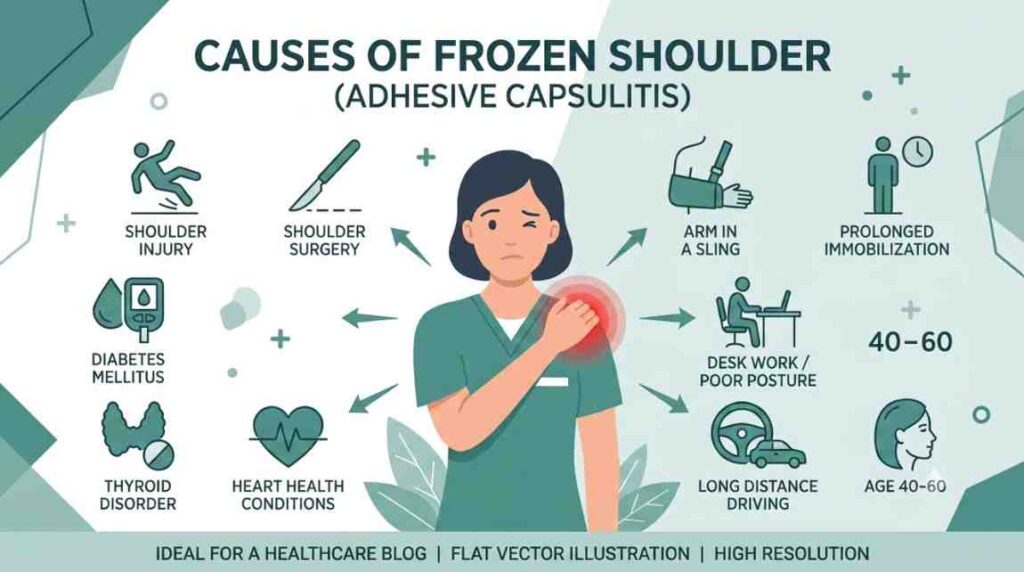
Frozen shoulder often develops after a period of reduced shoulder movement. This can happen after:
A shoulder injury or fracture
Shoulder surgery, including rotator cuff repair
Prolonged immobilisation, such as wearing a sling or arm cast
Recovery from another illness or hospitalisation that limits arm movement for an extended period
When the shoulder is kept still for weeks, the capsule can begin to tighten as a response to reduced use. This is part of why physiotherapists often encourage safe, gentle movement even during recovery from an unrelated shoulder injury, rather than complete immobility unless specifically advised otherwise by a doctor.
Medical and Lifestyle Factors
Certain health conditions are associated with a higher chance of developing frozen shoulder, including diabetes, thyroid disorders, and cardiovascular disease. Diabetes in particular shows one of the stronger associations, and people with diabetes may also experience a longer recovery period. Researchers are still studying why these connections exist, but changes in connective tissue metabolism and low-grade inflammation are thought to play a role.
Age-Related Factors
Frozen shoulder most commonly affects people between 40 and 60 years of age. It is also seen somewhat more often in women than in men. It is relatively uncommon in younger adults and children unless there is a specific triggering injury or surgery.
Occupational and Activity Patterns
People whose work involves long periods of limited shoulder movement, such as extended desk work or driving, may notice stiffness building up gradually without realising the shoulder capsule is involved until pain and restriction become more obvious.
Symptoms of Frozen Shoulder
Understanding the stages helps set realistic expectations for treatment and recovery, and it also helps explain why the same exercise plan is not appropriate at every point in the condition.
1. Freezing Stage
This is the painful stage. Shoulder movement becomes increasingly restricted, and pain, especially at night, is often the main complaint. Even small movements can trigger sharp discomfort. This stage can last anywhere from six weeks to several months, and it is often the stage where people first seek medical attention because the pain becomes difficult to ignore.
2. Frozen Stage
Pain may begin to ease during this stage, but stiffness remains significant and sometimes becomes the dominant symptom. Daily activities that involve lifting the arm, reaching overhead, or rotating the shoulder become noticeably harder. This stage can also last for several months, and some patients describe it as the most functionally limiting phase because pain is lower, but movement is still very restricted.
3. Thawing Stage
Shoulder mobility gradually starts to return during this stage. Movement improves slowly but steadily for most people. This stage is often the longest, sometimes lasting six months to a year or more, and consistent physiotherapy during this phase can meaningfully support the return of normal movement and prevent the shoulder from settling into a permanently restricted range.
It is important to remember that these stages do not follow a fixed calendar for everyone. Recovery speed depends on the individual, the severity of the condition, associated health conditions like diabetes, and how consistently treatment is followed. Some people move through the stages relatively quickly, while others experience a longer overall course.
Who Is at Risk
Certain groups are more likely to develop frozen shoulder:
People with diabetes, particularly those with long-standing or poorly controlled blood sugar levels
People recovering from shoulder surgery or injury
Individuals with thyroid conditions, including both overactive and underactive thyroid
People who have kept their arm immobile for an extended period, such as after a fracture or stroke
Adults between 40 and 60 years old
Office workers and homemakers who repeat limited shoulder movement patterns over long periods
People who have already experienced frozen shoulder in one shoulder, since the other shoulder carries a somewhat higher chance of being affected later
If you fall into one of these groups and notice shoulder stiffness that is not improving within a few weeks, it is worth getting it evaluated early rather than waiting for it to resolve on its own.
Frozen Shoulder vs Other Shoulder Conditions
Shoulder pain and stiffness can come from several different sources, and frozen shoulder is often confused with other conditions in the early stages. Recognising the differences helps set the right expectations before a professional assessment.
Feature | Frozen Shoulder | Rotator Cuff Injury | Shoulder Arthritis |
Main issue | Tightened joint capsule | Torn or inflamed tendon | Cartilage wear in the joint |
Movement pattern | Both active and assisted movement restricted | Active movement painful, assisted movement often better | Gradual stiffness with joint noise or grinding |
Onset | Gradual, over weeks to months | Can be sudden after injury or gradual with overuse | Very gradual, often over years |
Typical age group | 40 to 60 years | Any age, more common with overuse or trauma | Usually older adults |
Night pain | Very common | Common, especially lying on the shoulder | Possible but less dominant |
This comparison is a general guide rather than a diagnostic tool. A physiotherapist or orthopedic specialist can confirm the exact cause through a proper physical examination, since some conditions can overlap or occur together.
How is Frozen Shoulder Diagnosed
Frozen shoulder is primarily diagnosed through a detailed medical history and physical examination. Your healthcare provider evaluates pain levels, shoulder movement, and functional limitations. Imaging tests such as X-rays or MRI scans may be recommended to rule out other shoulder conditions rather than confirm frozen shoulder itself.
Clinical History
The examiner will ask about when the pain started, what movements are difficult, whether there was any recent injury, surgery, or period of immobility, and whether the patient has diabetes, thyroid issues, or other relevant medical history. This conversation often provides strong clues even before any physical testing begins.
Physical Examination
The shoulder is assessed for active range of motion, meaning movement the patient can perform on their own, and passive range of motion, meaning movement the examiner assists with. In frozen shoulder, both active and passive movement are usually restricted in a fairly consistent pattern, which helps distinguish it from other shoulder problems like a rotator cuff tear, where passive movement is often less affected.
Functional Assessment
The examiner may also observe how the shoulder moves during simple functional tasks, such as reaching behind the back or lifting the arm overhead, to understand the practical impact on daily life.
Imaging Tests
X-rays are sometimes used to rule out other causes of shoulder pain, such as arthritis or calcium deposits. An MRI or ultrasound may be recommended in certain cases to provide a clearer picture of the joint capsule and surrounding soft tissues, particularly if the diagnosis is unclear or another condition, such as a rotator cuff tear, is suspected. However, imaging is not always required for a confident diagnosis, since the clinical pattern of frozen shoulder is often distinctive enough on its own.
Imaging is often used to exclude other causes of shoulder pain.
TEST | PURPOSE |
X-ray | Rules out arthritis, fractures, or bone abnormalities |
MRI | Evaluates rotator cuff tears and soft tissue injuries |
Ultrasound | Assesses tendons, bursae, and muscles |
CT Scan | Occasionally used for complex shoulder problems |
Best Frozen Shoulder Treatment Options
Quick Answer
The best treatment depends on the stage of frozen shoulder, symptom severity, and the individual’s overall health. Most people improve with a combination of physiotherapy, pain management, gentle exercises, and lifestyle modifications. Surgery is generally considered only when conservative treatment has not provided sufficient improvement.
Physiotherapy
Physiotherapy is widely considered the foundation of frozen shoulder treatment. A physiotherapist designs a structured plan involving stretching, joint mobilisation techniques, and gradual strengthening based on the shoulder’s stage. This approach addresses both pain and the underlying stiffness rather than one or the other alone.
Pain Relief Medication
Over-the-counter pain relievers or anti-inflammatory medication may help manage pain and discomfort, particularly during the freezing stage when pain tends to be most intense. Medication decisions, including dosage and duration, should always be made with a doctor’s guidance rather than self-prescribed.
Corticosteroid Injections
A cortisone injection into the shoulder joint can help reduce inflammation and pain, especially during the early, more painful stage. This is usually combined with physiotherapy rather than used as a standalone treatment, since it primarily addresses pain and inflammation rather than the underlying capsule tightness.
Hydrodilatation
In some cases, a doctor may recommend a procedure where sterile fluid is injected into the joint capsule to help stretch the tightened tissue. This is typically considered when other conservative treatments have not provided sufficient relief after a reasonable trial period.
Manipulation Under Anesthesia or Surgery
For a smaller number of patients whose symptoms do not improve with conservative treatment over several months, a doctor may discuss manipulation under anesthesia, where the shoulder is gently moved through its range while the patient is under anesthesia, or arthroscopic surgery to release the tightened capsule. These options are generally considered only after other approaches have been tried and are decided on a case-by-case basis with an orthopedic specialist.
Treatment choice depends on the stage of frozen shoulder, the severity of symptoms, the response to earlier treatment, and the individual’s overall health, and should always be guided by a qualified healthcare professional rather than chosen independently.
Role of Physiotherapy in Frozen Shoulder Recovery
Physiotherapy plays a central role at every stage of frozen shoulder recovery, though the specific focus shifts depending on which stage the patient is in.
During the Freezing Stage
The emphasis is on gentle movement, pain management techniques such as guided positioning and light mobilisation, and avoiding positions that aggravate pain, while still preventing the shoulder from becoming completely immobile. Pushing too hard during this stage can sometimes increase irritation, so a physiotherapist carefully calibrates intensity.
During the Frozen Stage
Physiotherapy shifts toward manual therapy and controlled stretching to gradually improve range of motion without causing excessive irritation. This stage often requires patience, since improvements can feel slow even with consistent effort.
During the Thawing Stage
This stage often benefits the most from consistent physiotherapy. Progressive stretching, strengthening exercises, and functional movement training help restore normal shoulder use for daily activities and work. Strengthening becomes more important here, since months of restricted movement can lead to some muscle weakness around the shoulder that needs to be rebuilt alongside mobility.
A physiotherapist also monitors progress between visits and adjusts the treatment plan as the shoulder responds, a process that is difficult to do safely and effectively without professional guidance. Self-directed exercise without any assessment carries a risk of either under-treating the stiffness or overloading an already irritated joint.
Best Exercises for Frozen Shoulder Treatment
Exercises should be performed only within a comfortable range. Sharp or worsening pain is a sign to stop and consult your physiotherapist.
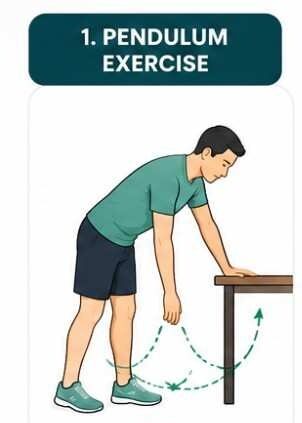
1. Pendulum Exercise
Purpose: Gentle shoulder movement.
How to Perform:
Lean forward while supporting yourself with the opposite hand.
Let the affected arm hang naturally.
Move the arm in small circles.
Continue for 30–60 seconds.
Benefits:
Reduces stiffness
Promotes gentle mobility
Suitable for early stages
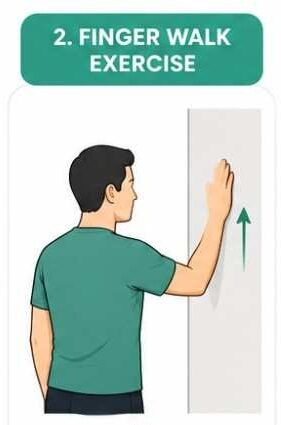
2. Finger Walk Exercise
Stand facing a wall.
Use your fingers to slowly “walk” the hand upward until a gentle stretch is felt.
Lower the hand slowly.
Repeat 10–15 times.
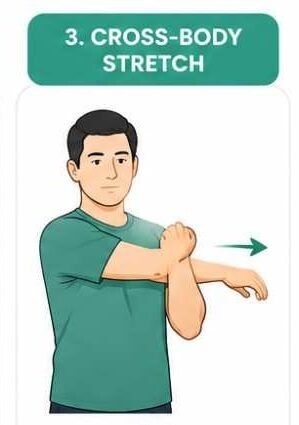
3. Cross-Body Stretch
Gently pull the affected arm across your chest until you feel a mild stretch.
Hold for 20–30 seconds.
Repeat several times as advised.
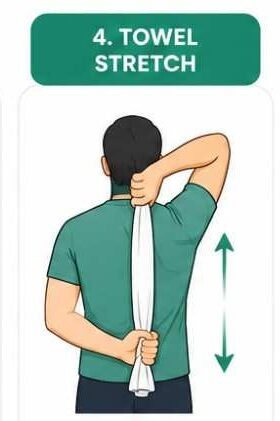
4. Towel Stretch
Hold a towel behind your back with both hands.
Use the unaffected arm to pull the affected arm upward gently.
This exercise may improve internal shoulder rotation.
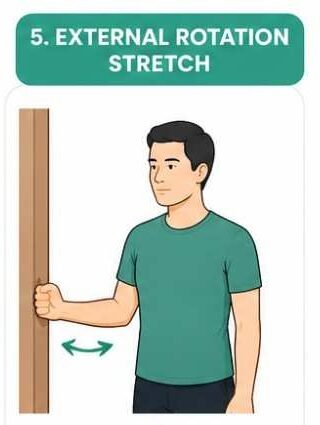
5. External Rotation Stretch
Keep your elbow close to your body.
Use a stick or cane to rotate the affected arm outward gently.
Avoid forcing the movement.
Common Exercise Mistakes
Avoid:
Exercising through severe pain
Fast, jerky movements
Skipping warm-up
Stopping exercises completely after pain decreases
Comparing recovery with others
Consistency is usually more beneficial than intensity.
Frozen Shoulder Recovery Timeline
Recovery varies depending on:
Stage of the condition
Age
Overall health
Presence of diabetes
Adherence to physiotherapy
Severity of stiffness
STAGE | TYPICAL DURATION | MAIN FEATURES |
Freezing | 2–9 months | Pain increases, movement decreases |
Frozen | 4–12 months | Pain may lessen, stiffness remains |
Thawing | 6–24 months | Gradual return of mobility |
Some people recover within a year, while others may take longer. Following a structured rehabilitation program and attending regular follow-up appointments can support recovery.
Physiotherapy vs Surgery
PHYSIOTHERAPY | SURGERY |
First-line treatment | Reserved for selected cases |
Non-invasive | Invasive procedure |
Improves mobility gradually | Considered after prolonged conservative treatment |
Lower risk | Requires post-operative rehabilitation |
Suitable for most patients | Appropriate only when clinically indicated |
Home Care and Daily Life Adjustments
Alongside structured physiotherapy, small adjustments at home can support comfort and recovery between sessions.
Heat and Cold Application
Some patients find gentle heat helpful before stretching exercises, as it can make the tissue feel more pliable, while cold application after activity may help calm irritation. Preferences vary between individuals, and a physiotherapist can advise on which approach suits a particular stage of recovery.
Sleep Positioning
Since night pain is common, especially during the freezing stage, adjusting sleep position can help. Sleeping on the unaffected side with a pillow supporting the affected arm, or slightly propped up, may reduce pressure on the joint and improve sleep quality.
Pacing Daily Activities
Breaking up tasks that require repeated overhead reaching, and avoiding sudden heavy lifting with the affected arm, can prevent unnecessary flare-ups while the shoulder is healing.
Consistency Over Intensity
Gentle, regular movement performed consistently tends to be more helpful than occasional intense stretching sessions. Short daily sessions, guided initially by a physiotherapist, are generally more effective than infrequent long ones.
Workplace Ergonomics and Frozen Shoulder
For office workers and desk-based professionals, workplace posture and setup can influence shoulder comfort during recovery.
- Keep the keyboard and mouse close enough that reaching forward repeatedly is not required
- Adjust chair height so the shoulders can stay relaxed rather than hunched or elevated
- Take short breaks every hour to gently move the shoulders and avoid prolonged static positions
- Avoid cradling a phone between the ear and shoulder, which places sustained strain on the joint
- If lifting or carrying is part of the job, use the unaffected arm where possible until cleared by a physiotherapist
These adjustments do not replace treatment, but they can reduce unnecessary strain on a shoulder that is already dealing with capsule tightness and inflammation.
Common Myths About Frozen Shoulder
Myth: Frozen shoulder will resolve completely on its own without any treatment.
Many people believe frozen shoulder simply needs time and will resolve by itself. While the condition can improve over a long period even with minimal intervention, untreated frozen shoulder often takes considerably longer to resolve and carries a higher chance of leaving behind some residual stiffness. Structured physiotherapy tends to support a smoother and often faster path toward functional recovery.
Myth: Rest is the best way to protect a stiff shoulder.
Complete rest can actually allow the capsule to tighten further. Gentle, guided movement, appropriate to the current stage, is generally more helpful than avoiding movement altogether.
Myth: Pain means the exercises are working.
Mild stretching discomfort is expected, but sharp or worsening pain is not a sign of effective treatment. It usually signals that the exercise intensity needs to be adjusted.
Myth: Frozen shoulder only affects older adults.
While it is most common between 40 and 60 years of age, frozen shoulder can occur in younger adults too, particularly after shoulder surgery, injury, or prolonged immobilisation.
Myth: Surgery is usually required.
Most cases of frozen shoulder are managed successfully with physiotherapy and conservative treatment. Surgery is considered only for a smaller group of patients who do not respond adequately to conservative approaches over an extended period.
When to See a Doctor
While frozen shoulder itself is not an emergency condition, certain symptoms warrant prompt medical evaluation:
- Sudden, severe shoulder pain following an injury
- Visible deformity of the shoulder
- Complete inability to move the arm
- Signs of infection, such as fever, redness, or warmth around the joint
- Numbness or weakness spreading down the arm
If shoulder stiffness and pain are gradually worsening over weeks and interfering with sleep or daily activities, it is a good idea to consult a physiotherapist or orthopedic specialist rather than waiting for it to resolve on its own. Earlier evaluation generally allows for a wider range of conservative treatment options.
Preventing Frozen Shoulder
Stay Physically Active
Gentle shoulder movements help maintain joint flexibility. Long periods without movement can increase the risk of stiffness.
Follow Your Physiotherapy Plan
If you’ve had shoulder surgery or an injury, follow your prescribed rehabilitation program to regain mobility safely.
Control Chronic Conditions
People with diabetes or thyroid disorders have a higher risk of frozen shoulder. Keeping these conditions well managed may help lower the risk.
Maintain Good Posture
Poor posture, especially during prolonged desk work, may contribute to shoulder discomfort. Use an ergonomic workstation and take regular movement breaks.
Warm Up Before Exercise
Prepare your shoulder muscles with light stretching and mobility exercises before sports or strenuous activities.
Avoid Prolonged Immobilization
If you need to wear a sling after an injury, begin gentle movement as advised by your healthcare provider.
Why Choose Professional Frozen Shoulder Treatment in Noida?
If you’re looking for the best frozen shoulder treatment in Noida, receiving early assessment and an individualized rehabilitation plan can make a meaningful difference.
At Satyarogya Healthcare, treatment plans are designed around the patient’s condition, goals, and stage of recovery. Care may include:
- Comprehensive physiotherapy assessment
- Manual therapy
- Evidence-based exercise programs
- Posture and ergonomic education
- Home exercise guidance
- Progress monitoring and treatment adjustments
At Satyarogya Healthcare in Sector 20, Noida, frozen shoulder treatment is approached through this stage-specific, physiotherapy-led model, with home physiotherapy options also available for patients across Noida, Greater Noida, and the wider NCR region who find it difficult to travel regularly for in-clinic sessions.
Frequently Asked Questions
Frozen shoulder is a condition where the shoulder joint capsule becomes thick and tight, leading to pain and restricted movement. It develops gradually and progresses through distinct stages before typically resolving.
Physiotherapy cannot instantly reverse frozen shoulder, but it plays a major role in reducing pain, restoring range of motion, and supporting recovery through each stage. Most treatment plans rely heavily on structured, consistent physiotherapy.
Frozen shoulder recovery timelines vary widely between individuals, often ranging from several months to over a year. Consistency with treatment and early intervention can support a smoother recovery.
No. Frozen shoulder involves stiffening of the joint capsule, while a rotator cuff injury involves damage to the muscles or tendons around the shoulder. Both cause shoulder pain, but they require different diagnostic approaches and treatment plans.
It is uncommon for frozen shoulder to return in the same shoulder after full recovery, though some people may develop it in the other shoulder over time. Ongoing shoulder mobility habits can help support long-term joint health.
Diabetes is associated with a higher likelihood of developing frozen shoulders and can sometimes be linked with a longer recovery period. Managing blood sugar levels alongside physiotherapy is often recommended for individuals with diabetes.
Gentle, guided movement is usually encouraged even when there is some discomfort, but exercises should stay within a mild stretching sensation rather than sharp pain. A physiotherapist can help determine the right intensity for your current stage.
Most people recover with conservative treatment such as physiotherapy, medication, or injections. Surgery is generally considered only when conservative approaches have not provided sufficient improvement after an extended period.
If shoulder stiffness or pain persists for more than a few weeks, worsens at night, or interferes with daily activities, it is advisable to consult a physiotherapist or orthopedic specialist for a proper evaluation.
Yes, physiotherapy-led Frozen Shoulder Treatment in Noida is available at Satyarogya Healthcare Clinic in Sector 20, Noida, along with home physiotherapy options for patients across Noida, Greater Noida, and the wider NCR region.
Medical Disclaimer !
This article is intended for general educational purposes only and does not replace professional medical advice, diagnosis, or treatment. Frozen shoulder symptoms and severity vary between individuals, and a qualified physiotherapist or doctor should personalise any exercise or treatment plan. Please consult a healthcare professional before starting any new treatment or exercise routine, especially if you have an existing medical condition.
Call to Action
If shoulder stiffness or pain is affecting your daily life, visit Satyarogya Healthcare for the best frozen shoulder treatment in Noida, Sector 20, which can help assess your condition and guide you through a personalised recovery plan.
Book a consultation: WhatsApp +91 8448574664 | Email info@satyarogya.com Or contact our physiotherapy experts for personalised guidance on managing your frozen shoulder.
Satyarogya Healthcare
Trusted Physiotherapy & Autism Centre in Noida
- D-3, Sec-20, Noida, UP
- +91 8448574664
- info@satyarogya.com
- Physiotherapy
- Nursing
- Autism (ASD)